Home · Whole-Home Organization
Whole-Home Organization.
Room-by-room systems designed around your household’s real behavior, built to hold up on the worst week of the month.
The situation
Organized is not the same as tidy.
Tidy is a state. Organized is a structure. A tidy house can collapse in a weekend; an organized one absorbs a bad week and recovers on its own.
The difference is where things live. When every item has an obvious home that sits within reach of where it is used, putting things away stops being a chore and becomes the path of least resistance. That is the entire objective.
We work with what you already own wherever we can, and we design for the household you actually have — including the people in it who will never fold anything.
What is included
Rooms and systems we work on.
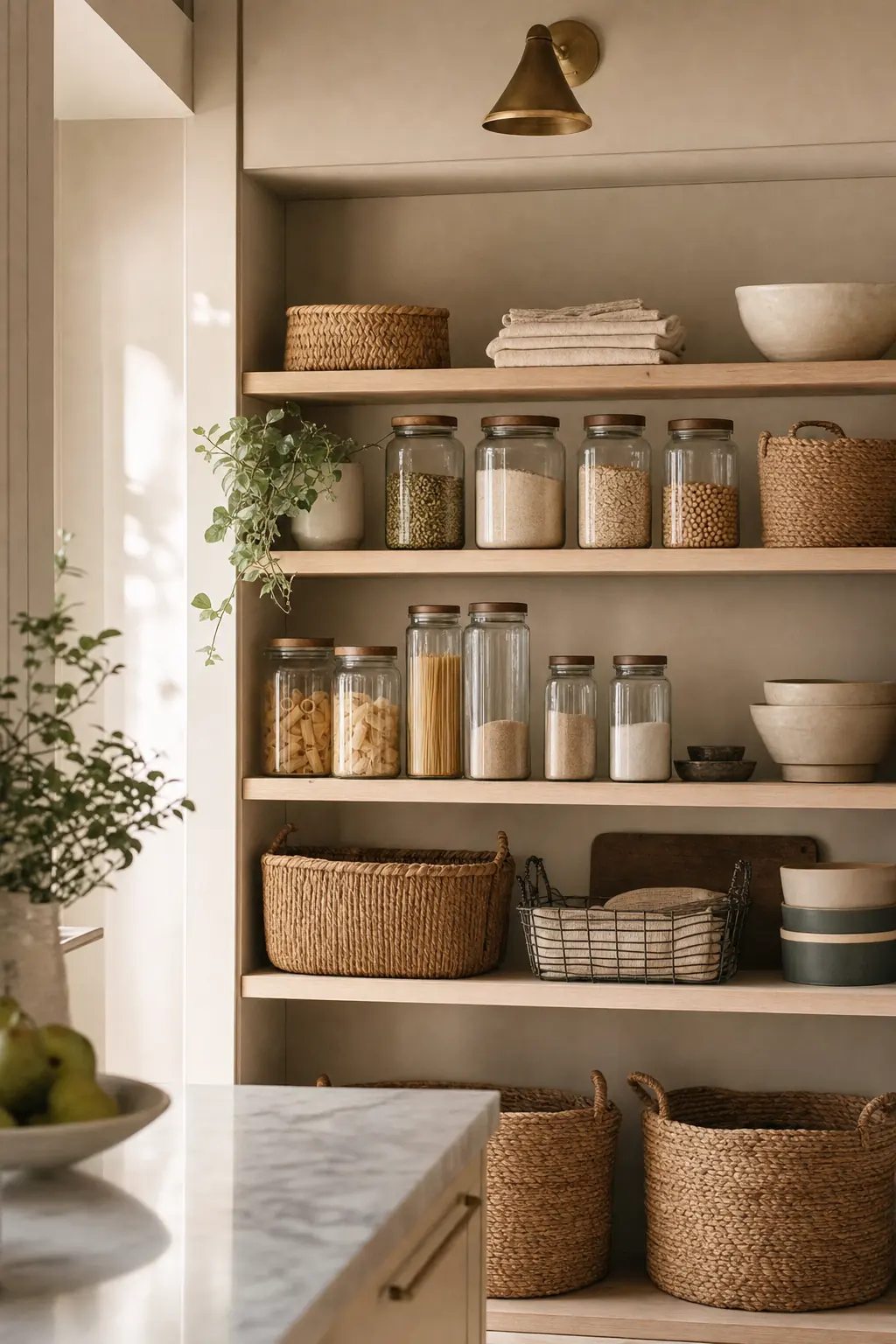
- Kitchens and pantries — zones for cooking, storing, unpacking shopping and the daily routine.
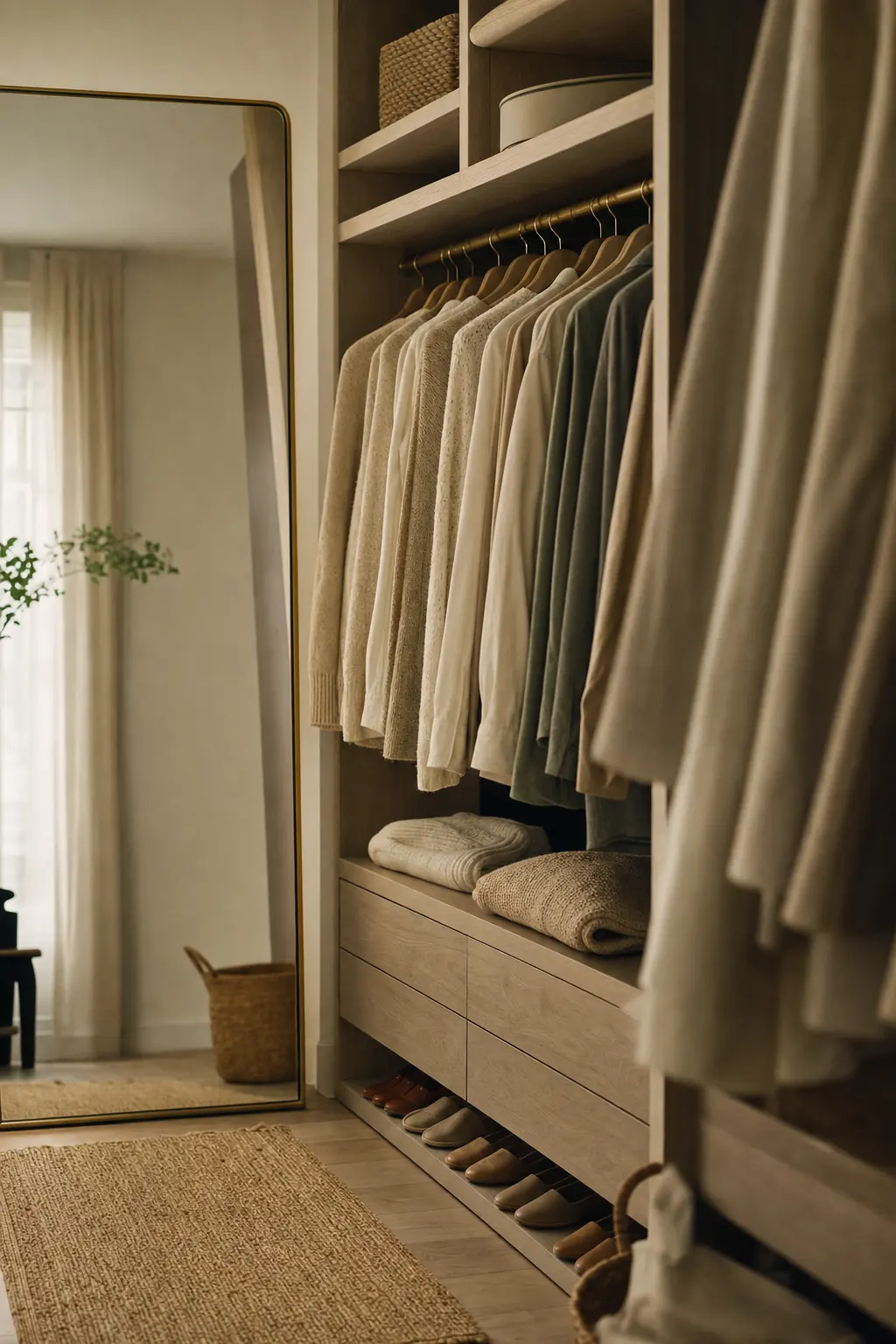
- Closets and dressing rooms — edited, categorized and genuinely easy to get dressed from.
- Entryways and mudrooms — the drop zone that decides how the whole house feels.
- Home offices and paperwork — workable filing and an end to the paper pile.
- Children’s rooms and playrooms — systems a child can actually use unaided.
- Bathrooms and linen storage.
- Garages, basements, attics and long-term storage.
- Household systems — meal planning, laundry rhythms, calendars and the routines that hold it together.
How it works
How a project runs.
Walk-through
We see the space as it is and talk about how the household really uses it.
Plan
A written proposal: rooms, sequence, team, days and cost. Nothing begins before you approve it.
Sort and edit
Everything out, grouped by category, decisions made calmly with you and at your pace.
Place and hand over
Containment, placement and labeling, then a walk-through so the system is genuinely yours.
The details
Small decisions, disproportionate effect.
- Storing items at the point of use, not at the point of tradition.
- Prime shelf space earned by frequency, not by size.
- Categories that match how you speak about things, not how a catalog does.
- Containers that fit the shelf and the item, chosen after the sorting rather than before.
- Labels for shared spaces, so the system survives other people.
- Deliberate empty space, because a full system has nowhere to put tomorrow.
Questions
Common questions
Where should we start?
Will it look like the photographs on Instagram?
What if I have a family who will not maintain it?
Can you organize a home for someone aging in place?
Book a home consultation.
A consultation is a conversation, not a commitment.